

SEO
How Website Speed Affects SEO and Customer Experience
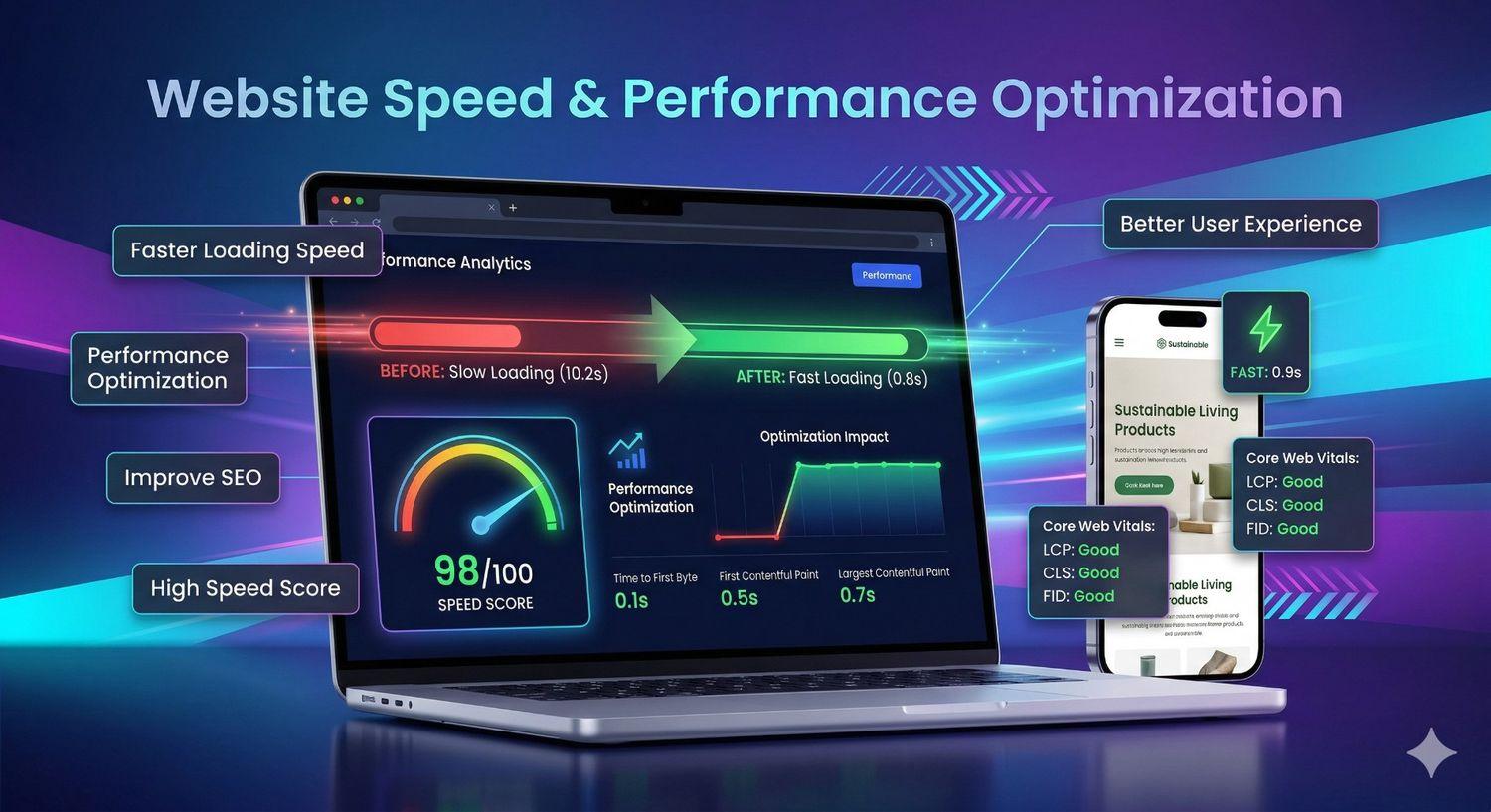
Website speed affects how quickly visitors can view and interact with a page. A slow website can create frustration, reduce engagement, and cause potential customers to leave before taking action.
Creating a Better First Impression
Visitors expect a website to respond quickly. Fast-loading pages make a business appear more professional, reliable, and easy to deal with.
Supporting Mobile Visitors
Many customers search from mobile devices, sometimes using slower connections. A lightweight, responsive website helps these visitors access information without unnecessary waiting.
Improving Engagement
When pages load smoothly, visitors are more likely to explore services, read articles, view products, and complete contact forms.
Compressing Large Images
High-resolution images can significantly increase loading time. Images should be compressed and resized according to where they appear without noticeably reducing their quality.
Removing Unnecessary Features
Too many plugins, animations, scripts, and tracking tools can slow down a website. Every feature should have a clear purpose and be tested regularly.
Choosing Reliable Hosting
Website performance also depends on the server. A reliable hosting service should provide suitable resources, security, and performance for the website’s expected traffic.
Testing Important Pages
Businesses should regularly test the homepage, service pages, product pages, and contact forms. Performance should be checked on both desktop and mobile devices.
Conclusion
Website speed supports SEO, customer satisfaction, and conversions. Improving images, hosting, mobile performance, and website code creates a faster and more effective online experience.
Got a project simmering?
Tell us what you're building — we'll tell you how to make it erupt.